Pirangut
08048033902
+919890751602

automotive end of line spm

6814772a5d263414004dd4a4 Card 2

product image
Automotive End-of-Line SPM

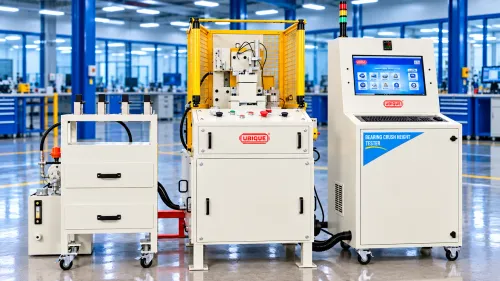
A half bearing shell testing machine verifies the fit, seating, geometry and load response of engine bearing shells before assembly. Ubique Systems can design application-specific nests, force and displacement measurement, variant identification and traceable acceptance logic around the customer’s bearing shell, housing and journal requirements. What is the purpose of this machine? Half bearing shells are precision engine components that support a rotating journal and help establish the required lubrication clearance. A dedicated test machine checks whether the correct shell variant is present and whether it meets the defined geometry, fit and seating requirements for the application. The exact test method depends on the customer’s component design and quality plan. A machine may combine dimensional measurement, controlled loading, seating or crush-response measurement, presence verification, visual inspection and traceability. The final machine should be specified from the bearing drawing, material, coating, housing, journal, datum scheme and acceptance limits. Why is half bearing shell EOL testing important? Bearing-shell condition affects alignment, oil-film formation, friction, heat generation and engine durability. Wrong shell selection, incorrect wall thickness, poor seating, excessive clearance, insufficient crush or surface damage may not be obvious after a quick visual inspection. An EOL test can identify these conditions before the shell enters the engine assembly. Typical working sequence The shell is loaded into an application-specific nest and identified by part number, barcode or vision. The fixture establishes the required datum and mating condition. Sensors may measure wall thickness, position, seating, crush, force, displacement or clearance-related response. If a functional load test is required, the machine applies a controlled force and records the response. The software compares the values with the exact variant recipe and stores the result. Typical machine features • Customer-specific nest based on shell profile, housing and journal geometry. • Poka-yoke for upper/lower, size, grade and variant identification. • Force and displacement sensors for controlled load response. • Dimensional, presence and vision inspection options. • Automated recipe selection and barcode or Data Matrix traceability. • Digital pass/fail report with configured limits. • Optional modules for bearing seal, split bush or related components. • Guarding and interlocks for safe production operation. Similar or related machines to include Related terms include engine bearing shell tester, connecting-rod bearing shell test machine, main bearing shell inspection machine, bearing crush test rig, bearing clearance test bench, split bush test rig, bearing seal tester and automotive bearing EOL inspection system.
6814772a5d263414004dd4a4 Card 2

product image
Automotive End-of-Line SPM

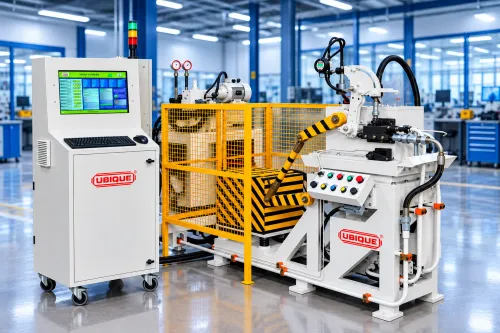
Ubique Systems’ control valve test rigs reproduce the hydraulic flow, pressure and loading conditions required to validate control valves used in tractor hydraulic lifts and other hydraulic applications. The machine measures pressure, flow, lift response, arm movement, relief behaviour and timing using configurable fixtures, instrumentation and PLC-based control. What is the purpose of this machine? A control valve regulates hydraulic oil flow and pressure to operate an actuator, lift or other hydraulic function. A control valve testing machine connects the valve to a controlled hydraulic circuit and applies the operating conditions required by the application. It can vary input flow, generate hydraulic or dead-weight loading, measure pressure and flow, and measure the resulting motion of the connected mechanism. Ubique’s existing control valve test rig is positioned around the hydraulic lift control valve used on tractor transmissions, while also being described as customizable for other hydraulic applications.[7] Why is control valve EOL testing important? A valve can be dimensionally correct and still deliver the wrong pressure, unstable flow, slow response, excessive drop or incorrect relief behaviour. Because the valve controls a hydraulic function, a defect may affect lift performance, load holding, operator control or system protection. EOL testing validates the entire functional response of the valve under controlled load instead of relying only on visual or dimensional inspection. Typical working sequence The correct valve variant is identified by barcode or production program. The valve is secured in the fixture and connected through quick-release hydraulic couplings. The machine starts the filtered oil circuit and sets the required input flow. Hydraulic or dead-weight loading is applied. The control system measures no-load and loaded pressures, flow, arm displacement, lift time, angle, travel and relief-valve behaviour. The result is evaluated against variant-specific limits and stored for traceability. Typical machine features Ubique’s first-party page describes variable flow through a speed-controlled motor, variable loads commonly configured through a hydraulic circuit and cylinders, optional hydraulic or dead-weight loading, quick-release couplings, pressure transducers, high-back-pressure flowmeters, closed-loop oil supply and filtration, wire-encoder length measurement, arm-drop measurement, PC plus PLC control, LabVIEW/SCADA/.NET software, MES transfer, barcode, printing and automatic recipe selection.[7] Recommended feature wording: • Application-specific hydraulic circuit and valve fixture. • Variable flow and configurable hydraulic or dead-weight loading. • Accurate pressure and flow measurement. • Position, angle, lift time and drop measurement. • Filtered closed-loop oil supply. • Quick-release hydraulic connections and safe interlocks. • Multi-variant recipe control with barcode identification. • PLC/PC software, reports and MES connectivity options. Similar or related machines to include Related search terms include hydraulic control valve test rig, tractor control valve testing machine, hydraulic lift test rig, spool valve testing machine, hydraulic pressure-flow test bench, relief valve pressure tester, hydraulic valve response tester and valve functional EOL tester.

6814772a5d263414004dd4a4 Card 2

product image
Automotive End-of-Line SPM

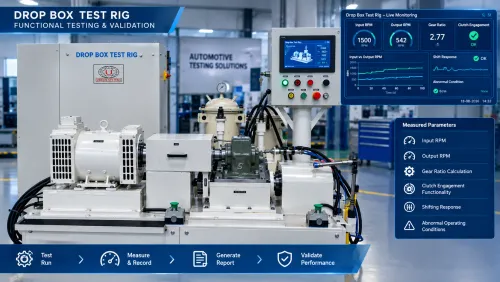
A drop box test rig validates the tractor transfer assembly that engages and disengages front-wheel or four-wheel drive. Ubique Systems’ customized machine controls input speed, loading, gear engagement and oil condition while measuring output response, speed relationship, ratio and load behaviour before the drop box is installed in the transmission. What is the purpose of this machine? A drop box, also called a transfer box in some applications, transfers drive from the transmission to a front axle or another output path. The drop box test machine validates the completed assembly as a standalone unit before it is mounted on the tractor transmission. The machine uses splined or application-specific adapters to connect the drive and output shafts. It can rotate the unit at variable speed, apply controlled load, command or support gear selection, and monitor oil filling, draining, filtration and interlock conditions. Why is drop box EOL testing important? Incorrect speed ratio, incomplete engagement, abnormal load response, poor lubrication, shaft misalignment or assembly errors can compromise 2WD/4WD operation and drivability. Testing the drop box before transmission integration helps prevent downstream rework and gives the manufacturer a clear record of functional acceptance. Typical working sequence The drop box is loaded into a poka-yoke fixture and identified. The machine checks seating and adapter engagement, confirms oil level and safety interlocks, fills or conditions oil if required, then drives the input at the programmed speed. The operator or automatic mechanism selects the required position. The loading unit applies the defined load and the machine measures input and output speeds, ratio and load response. At the end, oil may be drained, the result recorded and a barcode or report printed. Typical machine features Ubique’s first-party drop-box material describes variable input speed, loaded testing, settable loading, programmable test parameters, automatic oil filling and draining, manual shifting with automatic shifting available on request, closed-loop filtration, oil-level interlocks, poka-yoke, splined adapters, flexible couplings, PC/PLC control, barcode and multiple variant programs.[6] Similar or related machines to include Related terms include tractor transfer case test rig, 4WD engagement testing machine, transfer box testing machine, front-wheel drive engagement tester, tractor drop box EOL tester, transfer case ratio test bench and loaded transfer assembly test rig.

6814772a5d263414004dd4a4 Card 2

product image
Automotive End-of-Line SPM

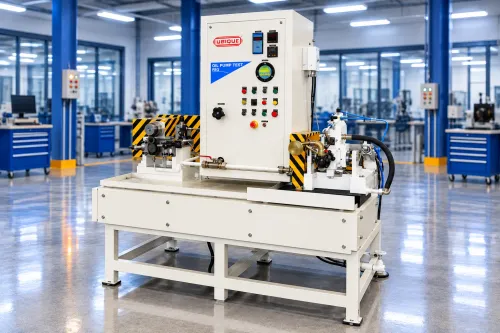
Ubique Systems designs oil pump and water pump test rigs that reproduce application-specific speed, back pressure, temperature and suction conditions. The system measures pump flow and pressure response at defined operating points, helping manufacturers verify fluid-delivery performance before the pump assembly reaches the vehicle. What is the purpose of this machine? A pump test machine validates whether an oil pump or water pump delivers the required fluid flow under the conditions expected in the application. The machine drives the pump at controlled speeds and circulates oil, coolant or another specified test fluid through a controlled circuit. It can generate defined back pressure, condition the fluid temperature, simulate negative suction head and measure the pump’s response. The oil pump version is suited to engine lubrication, transmission lubrication, hydraulic and other fluid-delivery applications. The water pump version is suited to engine cooling, thermal management and coolant circulation. The test rig can be designed for multiple pump variants with limited fixture changeover. Why is pump EOL testing important? A pump may rotate correctly and still fail to deliver sufficient flow at operating pressure or temperature. Low flow, excessive flow, pressure instability, internal slip, inlet restriction, cavitation risk or wrong rotation can lead to lubrication failure, overheating or insufficient cooling. EOL pump testing measures the actual performance curve of the finished assembly and provides an objective release decision. Typical working sequence The pump is located in a dedicated fixture and identified by barcode. The correct recipe sets speed, temperature, pressure, suction and test duration. The drive motor rotates the pump while the circuit controls back pressure and fluid condition. Flow, pressure, temperature and input conditions are continuously measured. The software compares the values with the programmed acceptance window, stores the result and can transfer data to MES. Typical machine features Ubique’s first-party oil-pump and water-pump pages describe customer-specific fixtures, variable speed through an AC variable drive controlled motor, variable back pressure through a manual or servo-controlled valve, high-back-pressure flow measurement, multiple circuit lines, controlled fluid temperature, suction-head simulation, PC plus PLC software, MES transfer, barcode, variant programs and closed-loop filtration.[4][5] Recommended feature wording: • Oil or coolant circuit designed for the application. • Controlled speed, back pressure and test-fluid temperature. • Manual or servo-controlled pressure regulation. • Flow measurement at zero and defined back pressure. • Negative suction-head simulation where required. • Multiple circuits for multi-variant or multi-pump testing. • Closed-loop filtration and fluid conditioning. • Automated fill, drain and level interlocks where required. • PC/PLC control, barcode recipes, reports and MES connectivity. Similar or related machines to include For oil pumps: engine oil pump test rig, transmission oil pump tester, lubrication pump test bench, hydraulic pump flow test machine, automotive pump performance tester, oil pump pressure-flow test rig. For water pumps: automotive water pump tester, engine coolant pump test rig, vehicle cooling system pump tester, electric water pump test bench, coolant flow test machine, thermal-management pump EOL tester.

6814772a5d263414004dd4a4 Card 2

product image
Automotive End-of-Line SPM

Ubique Systems manufactures customized front axle and rear axle test rigs for automotive, tractor, commercial vehicle, defence and e-mobility applications. The machine can validate speed, torque transmission, ratio, rotation, drag, backlash, temperature, leakage and NVH according to the customer’s axle design and acceptance criteria. What is the purpose of this machine? An axle testing machine checks a complete front axle, rear axle, drive axle or axle subassembly before shipment or vehicle integration. The test rig supports the assembly at its functional datums, connects the drive and output interfaces, and applies controlled speed and loading. Depending on the axle architecture, the system can test differential operation, wheel-end response, gear mesh, lubrication and noise behaviour. Ubique’s existing product structure distinguishes front axle and rear axle test rigs, allowing the website to create separate application pages while keeping them within one axle testing family.[3] Why is axle EOL testing important? The axle is a critical driveline and chassis assembly. Incorrect gear mesh, wrong ratio, bearing drag, excessive backlash, poor lubrication, seal leakage or assembly misalignment can result in noise, heat generation, poor drivability or premature wear. Detecting these conditions after vehicle assembly can cause line stoppage and expensive rework. EOL axle testing provides a controlled release gate before the unit reaches the vehicle. Typical working sequence The axle is loaded using a customer-specific fixture and identified by barcode. The machine connects to the input pinion, axle shafts, hubs or output interfaces as required. The control system commands the defined speed and load profile. It may run forward and reverse directions, check ratio, measure torque and capture vibration or acoustic signals. The software records the result against the axle serial number and can interface with MES or print a report. Typical machine features • Front axle and rear axle configurations. • Custom supporting structure and shaft or hub adapters. • Variable-speed drive and optional controlled loading. • Torque transducer and high-resolution speed sensing. • Forward/reverse testing and direction verification where required. • NVH acquisition option for gear, bearing and driveline noise. • Guarding, interlocks, poka-yoke and automatic result handling. • Barcode, printer, PC/PLC control and MES connectivity options. Similar or related machines to include Related search and product terms include front axle test rig, rear axle test rig, drive axle test machine, differential test bench, final drive test rig, e-axle testing machine, axle torque test bench, axle gear ratio tester, axle NVH test rig, tractor axle test machine and automotive driveline EOL tester.

6814772a5d263414004dd4a4 Card 2

product image
Automotive End-of-Line SPM

Ubique Industrial Systems’ gearbox and transmission testing machines are customized End-of-Line test rigs for tractor, passenger vehicle, commercial vehicle, heavy vehicle and e-mobility transmissions. The system can verify ratios, speed, torque transfer, gear engagement, shift behaviour, hydraulic functions, oil flow and NVH under defined operating conditions, with variant-specific recipes and traceable results. What is the purpose of this machine? A transmission testing machine checks whether a completed gearbox or transmission assembly performs its intended mechanical and hydraulic functions before it is installed in a vehicle or released to the next stage. The machine couples the transmission to a controlled drive system and, where required, a controlled loading system. The test sequence can command different gears, speeds, directions and load conditions while sensors record the response. The machine may be configured for a tractor transmission, manual transmission, automatic transmission, reduction gearbox, e-axle gearbox, transfer assembly or another customer-defined powertrain unit. The fixture, splined adapters, couplings, oil circuits, electrical interfaces and software are designed around the unit-under-test and its variant family. Typical working sequence The operator or automated material-handling system identifies the transmission by barcode or production ID. A poka-yoke fixture confirms correct variant orientation and seating. The machine connects the required shafts, hydraulic lines, lubrication circuit and electrical interfaces. The system may fill or condition oil before testing, select a customer-defined recipe, rotate the input at programmed speeds, engage selected gears, apply a defined load and record the resulting measurements. At the end of the sequence, the system generates a pass/fail result, stores the data and can print or transmit the report to the customer’s MES. Typical machine features Ubique’s first-party transmission material describes customized fixtures for multiple transmission variants, optional loaded testing, variable load and speed, automatic adaptation, automatic motor engagement, torque transducers, high-resolution incremental encoders, PC and PLC control, dedicated software, MES linkage, barcode scanning and printing, and turnkey functions such as oil filling and draining.

Subcategory Tags

Phone Number

08048033902

Please keep 0 before dialling the number.

Email Address sales@ubiquesystems.com

Mon-Thu: 10 AM - 2 PM • Fri: 3 PM - 7AM

Other Website Visit our other website
Address Gat 267/B-3, Plot 5E, JAWAHARLAL NEHRU INDUSTRIAL ESTATE, PIRANGUT,TALUKA - MULSHI, PUNE

Pirangut, Maharashtra, India, 412115